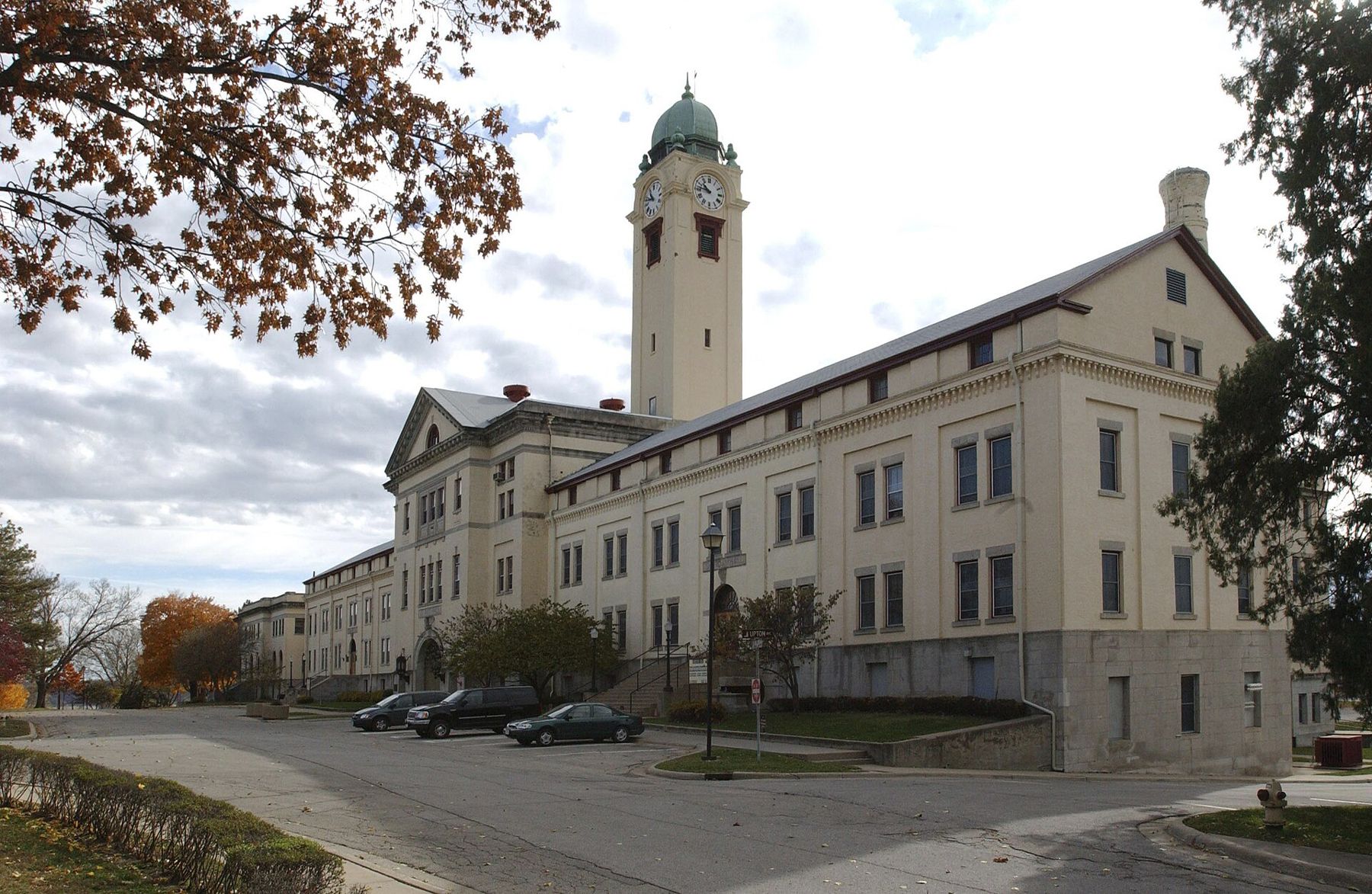
Leavenworth stands on the Kansas bank of the Missouri, about 30 miles northwest of downtown Kansas City and just across the river from Weston. It is two places in one: Fort Leavenworth, the Army post founded in 1827, and the city of Leavenworth, laid out beside it in 1854 and proud to call itself the first city of Kansas.
A fort on the edge of the West
In the spring of 1827 Colonel Henry Leavenworth led a detachment of the 3rd Infantry up the Missouri to choose a site for a post to protect the trade on the Santa Fe Trail. He picked high ground on the west bank, above the river and beyond the western border of Missouri. The post that grew there is the oldest active Army post west of the Mississippi River.
For the next half century the fort was a gateway to the West. Troops left from here to escort traders on the Santa Fe Trail, to explore the plains, to march against Mexico in 1846 and to keep watch over the overland trails. Emigrants passed by on the way to Oregon and California, and supplies for posts across the West were shipped from its landing. In the 1850s, as the Kansas Territory fell into violence over slavery, troops from the fort were called out again and again.
The fort today
Fort Leavenworth is still a working Army post, home of the Command and General Staff College, where officers from the United States and many other countries study. The grounds hold a long run of historic buildings, from officers' quarters of the nineteenth century to the large stone and brick halls of the early twentieth. Grant Hall, with its tall clock tower, is the best known.
The Frontier Army Museum on the post tells the story of the Army in the West, with uniforms, weapons, wagons and carriages. Nearby, the Buffalo Soldier Monument honors the Black soldiers of the 10th Cavalry, a regiment organized at Fort Leavenworth in 1866, and the other Black regiments of the frontier Army. The national cemetery on the post holds soldiers from every war since the fort was founded.
Because the fort is an active military installation, visitors pass through a security check at the gate, usually with photo identification, and the rules can change at short notice. Check before you go.
The first city of Kansas
The town of Leavenworth was laid out in 1854, the year the Kansas-Nebraska Act opened the territory, on land just south of the fort. Its first promoters were mostly from the Missouri side and favored slavery, but free-state settlers soon outnumbered them, and the town became a center of the territory's trade and politics. Abraham Lincoln spoke in Leavenworth in December 1859, on his only trip to Kansas, a few months before he won the Republican nomination for president.
During and just after the Civil War, Leavenworth was for a time the largest city in Kansas, a supply base for the Army and a busy river town. Freighting firms sent long wagon trains west from its levee. Kansas City, with its railroad bridge over the Missouri finished in 1869, soon drew much of the trade away, but Leavenworth kept the fort, a federal prison and a downtown full of buildings from its years of growth.
Downtown Leavenworth
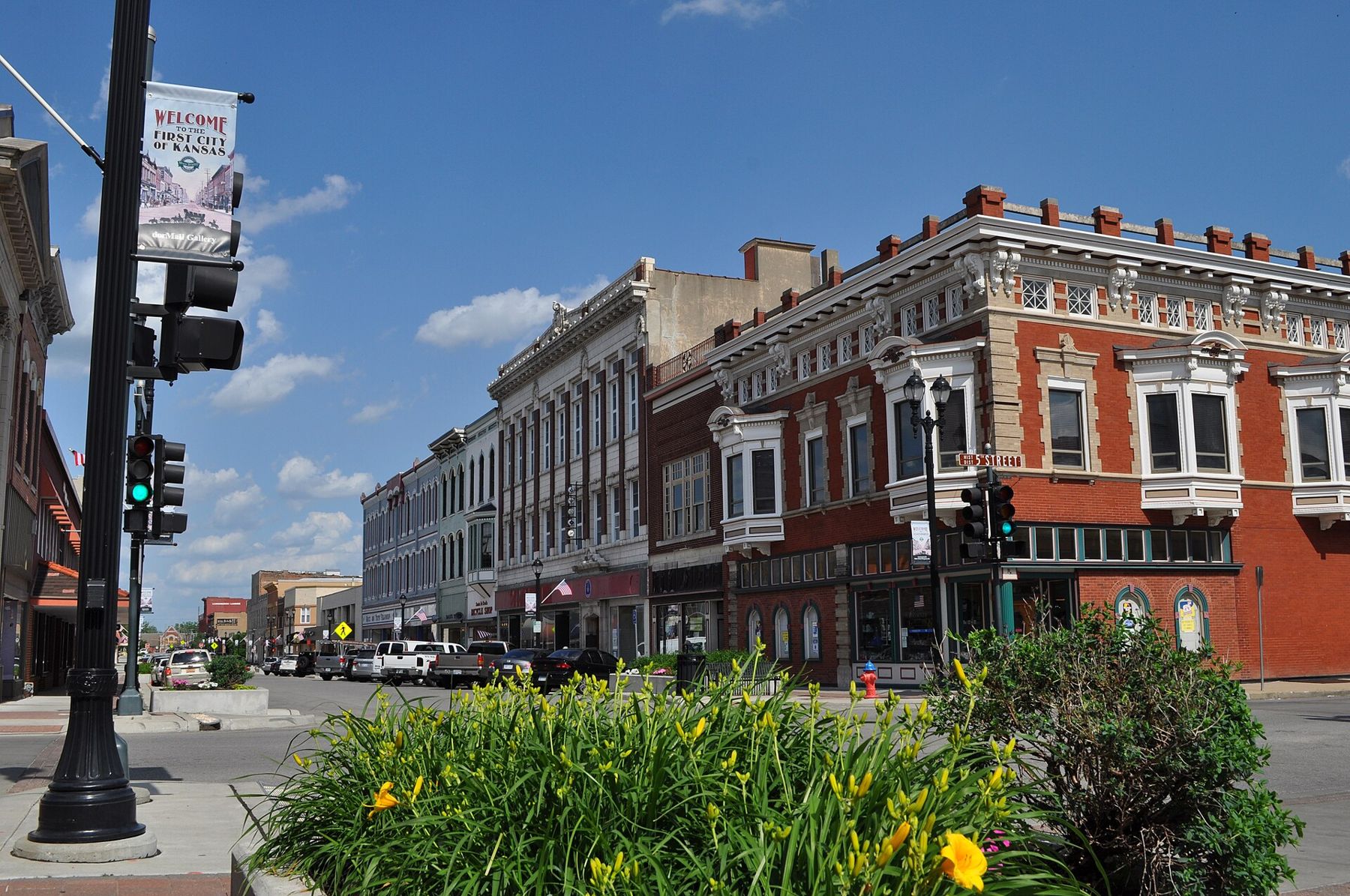
Downtown centers on Delaware Street, where several blocks of nineteenth-century brick and stone commercial buildings have been kept and repaired, with planters and street lamps along the sidewalks. Look up at the cornices, the bay windows on the upper floors and the cast-iron trim. The Carroll Mansion, a large Victorian house a short drive from downtown, holds the county historical society's museum, with rooms furnished in the style of the late nineteenth century.
The streets climbing west from downtown hold houses of every decade from the 1850s on, many built for officers, merchants and freighters. Look from the sidewalk; most are private homes.
Down at the river, the old levee where steamboats once tied up and freight wagons loaded is now a riverfront park. It is a good place to stand and look across the water at the wooded bluffs of Platte County, and to see how close the two states and their histories sit to each other. In the 1850s men crossed here in both directions to vote, raid and settle scores, and the river was more a border than a barrier.
Crossing from Weston
From Weston, it is a short drive south to Highway 92, which crosses the Missouri on the Centennial Bridge into downtown Leavenworth. The whole trip takes about 20 minutes, and the bridge gives a good look at the river and the bluffs on both sides.
From Leavenworth, highways run north along the Kansas side of the river to Atchison, and from there you can cross back to the Missouri side and continue to St. Joseph, making a long day's loop of the upriver towns. Lewis and Clark's keelboat passed below these same bluffs in the summer of 1804.
Planning a visit
- Getting there: from Kansas City, take I-435 and Highway 92, or K-7 north on the Kansas side, about 40 minutes.
- Time: half a day for the fort's museum and grounds, more with downtown and the historical society.
- Season: spring and fall are best for walking the post and the downtown streets.
- Fort access: gate rules, identification requirements and museum hours change. Check before you go.
Bring identification for every adult in the car. Without it, you may be turned back at the gate.
Notice
Notice: the oldest active Army post west of the Mississippi stands on the Kansas bluffs. Carry identification for the gate, then walk Delaware Street downtown.