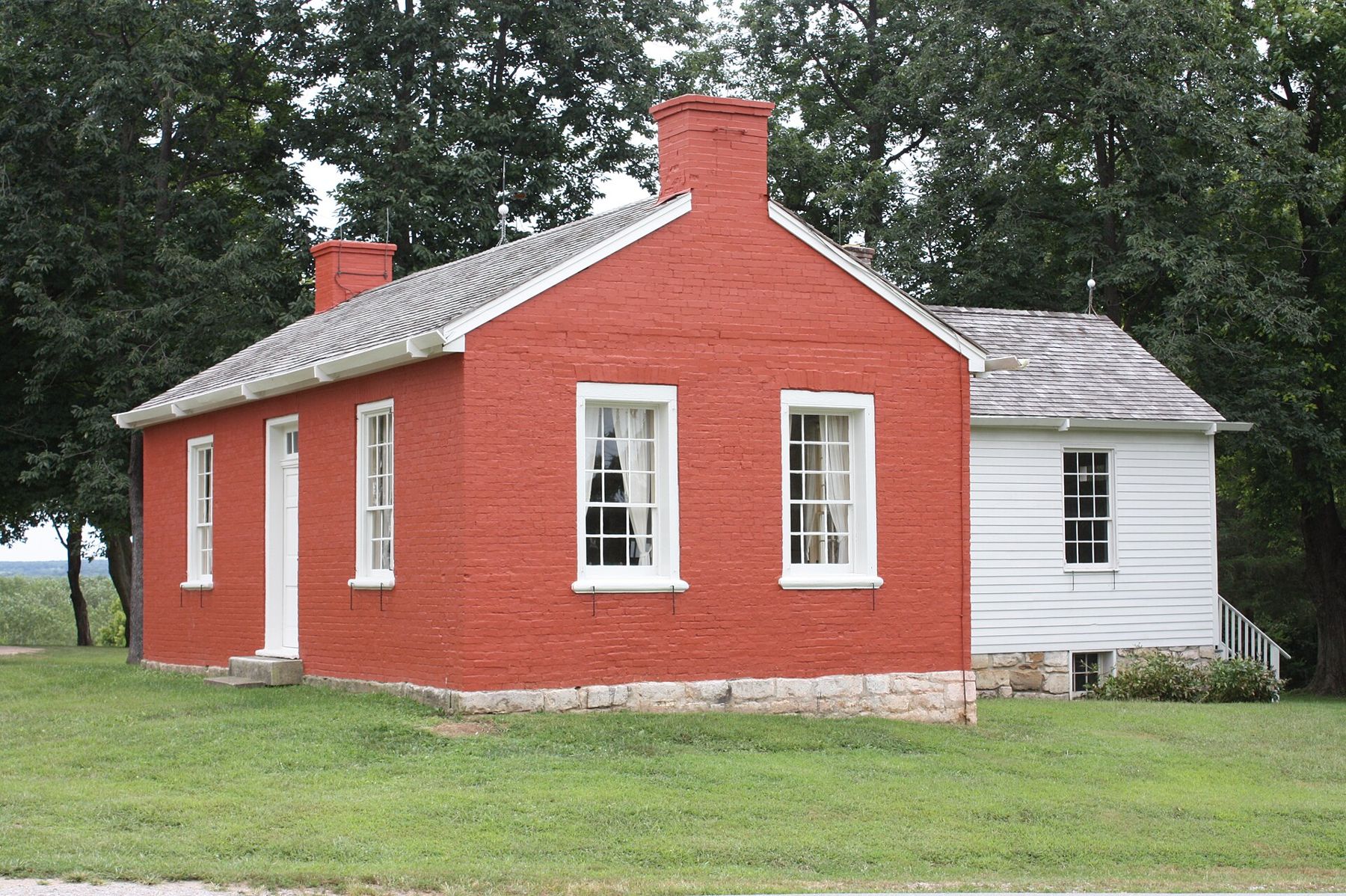
Arrow Rock is a village of a few dozen residents on a bluff above the Missouri River, about 100 miles east of Kansas City. In the 1830s and 1840s it was a working river crossing on the road west. Today the whole village is a National Historic Landmark, and much of it is protected as a state historic site.
The crossing and the trail
The bluff gave the place its name. The flint in the rock here was known to the region's Native peoples, and early French and American travelers called the high ground the rock of arrows. A ferry crossed the Missouri below the bluff by the 1810s, and the village laid out above it in 1829 was first called New Philadelphia before taking the older name.
The road through Arrow Rock was part of the route that William Becknell and other traders followed in 1821, when trade opened with Santa Fe after Mexico won its independence from Spain. Wagons crossed at the ferry and headed west across the prairie, and the early trade gave the Boonslick country, the river counties around here, a lasting link to the Southwest. The eastern end of the trail later moved upriver to Independence and Westport as steamboats carried freight farther west, but Arrow Rock kept its place as a river town and county market.
A village of Little Dixie
Saline County was part of Little Dixie, the band of Missouri River counties settled heavily from Kentucky, Tennessee and Virginia. Farms here grew hemp and tobacco with the labor of enslaved people, and a large share of the county's population before the Civil War was enslaved. The state historic site and local groups now interpret that history directly, including the lives of Black residents in the village after emancipation. It is part of the story of every brick building you pass.
The village also produced one of the region's best-known physicians. Dr. John Sappington, who lived nearby, sold quinine pills widely through the Missouri valley in the 1830s and 1840s, at a time when malaria was a common danger along the river bottoms.
Walking the village
Arrow Rock is small enough to walk end to end in a few minutes, and that is the point. The main street still has raised board sidewalks and deep stone gutters, built to handle the water that runs down the slope in a storm. Look at the old stone and brick buildings along Main Street, the small houses on the side streets, and the churches.
The old tavern building on Main Street dates from the 1830s and was built to serve travelers on the road. It is one of the oldest buildings in the village and has been restored by the state. Hours inside vary with the season.
The George Caleb Bingham House is a modest brick home the painter built in 1837. Bingham is the artist of the Missouri River as it was in the 1840s and 1850s: flatboatmen dancing on deck, fur traders drifting downstream, county elections and stump speeches. His pictures of river life are the closest thing you will find to a view of this stretch of the river in the steamboat years, and many of them were drawn from towns like this one. He was also active in Missouri politics, and during the Civil War he sided with the Union and later protested the forced removal of residents from the border counties in 1863.
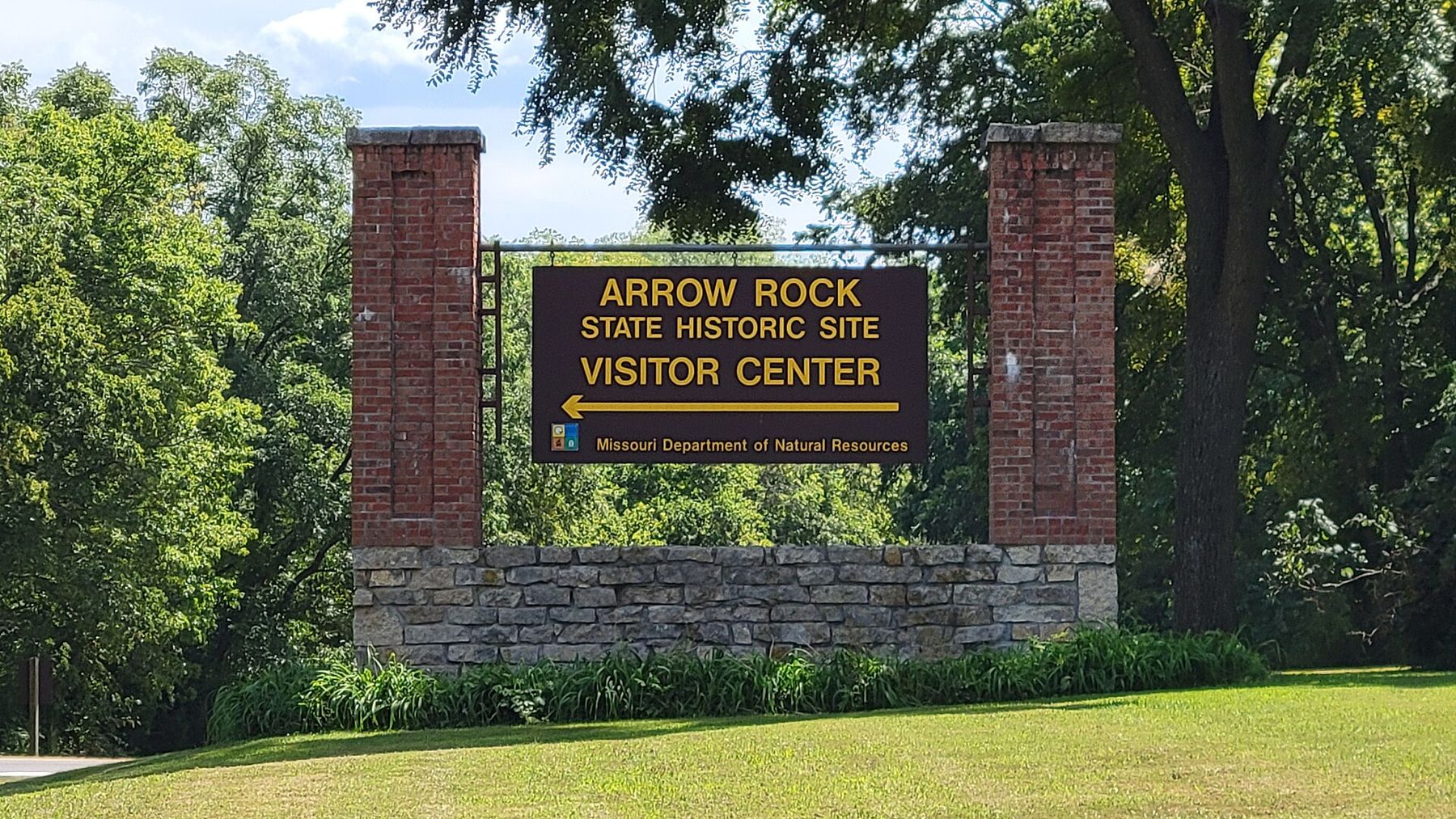
The state historic site's visitor center sits at the edge of the village and has exhibits on the Santa Fe Trail, the Boonslick settlements and the village's history. It is the best place to start, and it can tell you which buildings are open the day you visit.
Summer theatre
For a village so small, Arrow Rock has a long theatre tradition. A professional summer theatre has staged plays here since the early 1960s, starting in a former church on Main Street. The season usually runs from late spring into fall. If you want to see a play, book well ahead and check the dates, since the village fills on performance nights.
Other events, including craft fairs and heritage days, come and go from year to year. The visitor center can tell you what is on.
The river below
The Missouri that carried the ferry still runs below the bluff, but it is a different river now. Like every town on this stretch, Arrow Rock saw the channel shift, and the twentieth century's levees and channel works narrowed the river into a navigation channel. The river now runs some distance from the old ferry landing, and the view from the bluff takes in the wide bottoms that the river once moved across freely. For more on that, read about floods and the river that moved.
The river trip from here is a natural one. Upstream, the siege ground at Lexington is about 45 miles away. Downstream and across the river, the Katy Trail passes through Boonville and New Franklin, the old start of the Santa Fe road.
Planning a visit
- Getting there: take I-70 east from Kansas City, then Highway 41 north to the village. Allow about an hour and forty minutes each way.
- Time: half a day is enough for the visitor center, the tavern and a walk through town. Add an evening if you plan to see a play.
- Season: late spring and early fall are the best months. The theatre season and many building tours are limited in winter.
- Hours and fees: the state historic site sets its own schedule for tours and exhibits, and it changes through the year. Check before you go.
Wear shoes that handle uneven boards and stone, and watch your step at the curbs. The gutters are deeper than they look.
Notice
Notice: board sidewalks, an 1830s tavern and a painter's brick house stand above the Missouri. Come in spring or fall, and check the theatre season before you travel.