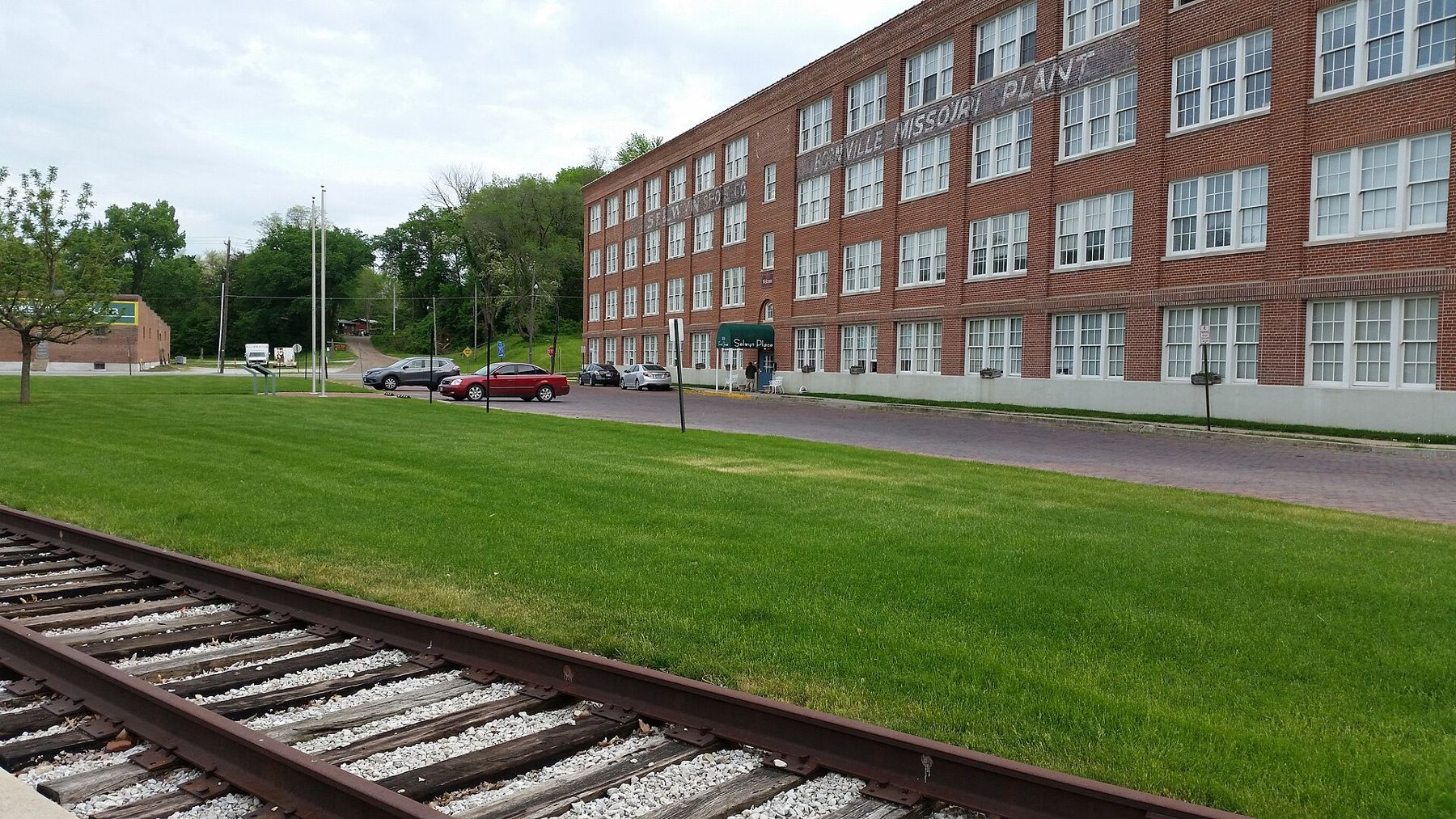
Boonville stands on the south bank of the Missouri River in Cooper County, about 105 miles east of Kansas City and just off I-70. It is one of the oldest towns on this stretch of the river, and it shows its age in layers: a frontier settlement, a steamboat port, a Civil War battleground, a railroad town and now a stop on the Katy Trail.
A town at the crossing
Settlers came to the Boonslick country, named after a salt lick worked by sons of Daniel Boone, in the 1810s. Boonville was laid out in 1817 on the south bank. Across the river, the town of Franklin was for a short time the larger place and the starting point of the Santa Fe trade, until the river ate into its streets in the late 1820s and the town moved to higher ground as New Franklin. Boonville, on firmer ground, kept its river landing and grew.
Like its neighbors, Boonville was part of Little Dixie, and the farms of Cooper County were worked in large part by enslaved people before the Civil War. German immigrants arrived in numbers from the 1830s and 1840s, and their influence shows in the town's churches, its brick commercial blocks and its old social halls.
Thespian Hall
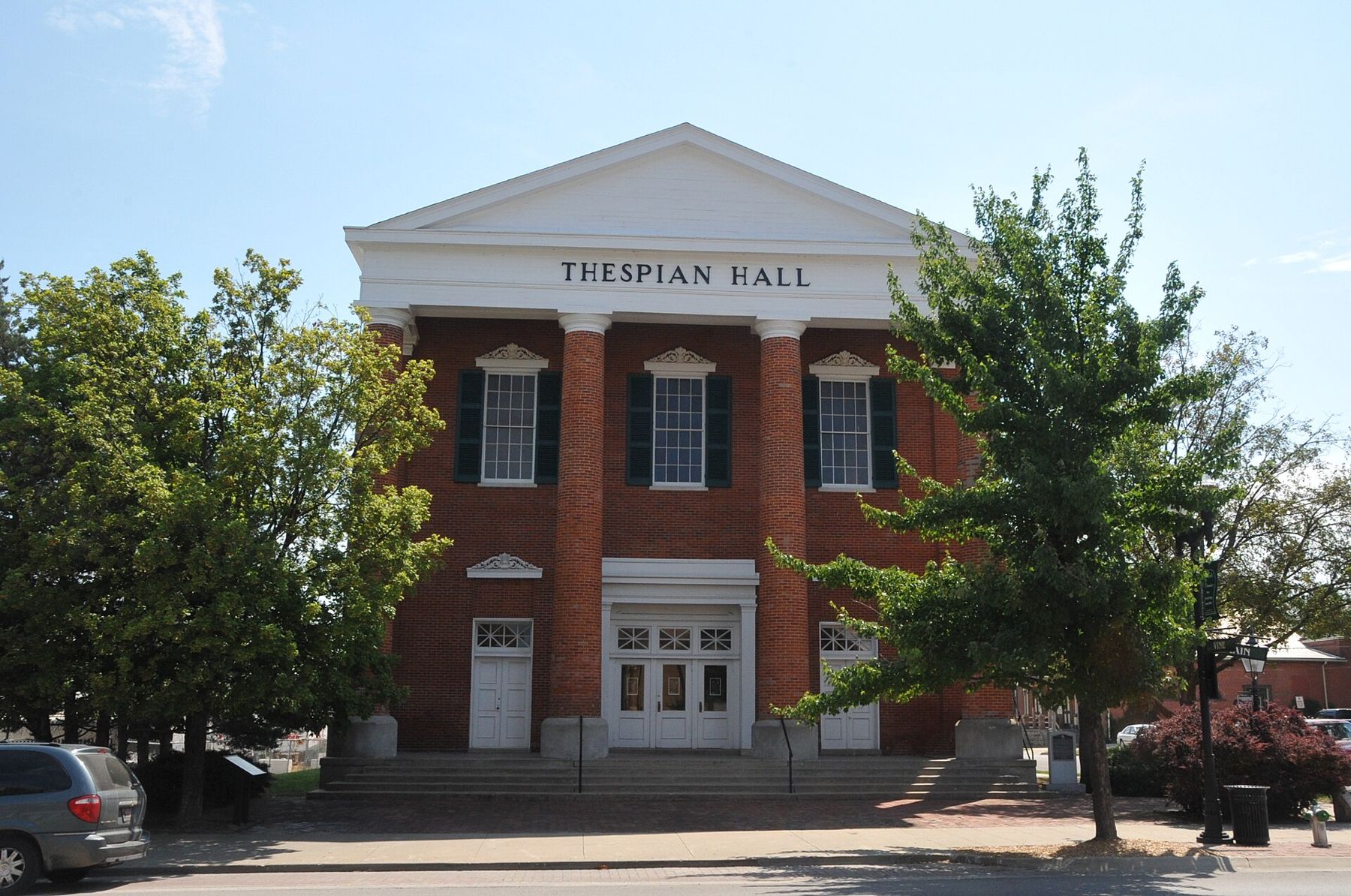
The town's best-known building is Thespian Hall on Main Street, a brick Greek Revival hall with tall white columns, completed in 1857 for an amateur theatre society. It is often described as the oldest theatre still in use west of the Alleghenies.
The building has had many lives. During the Civil War both armies used it, as barracks, a hospital and a prison. After the war it served as an opera house, a lodge hall, a skating rink and, for much of the twentieth century, a movie theater. It was restored in the 1970s and is used again for concerts and performances. You can see the facade any time from the street; check before you go if you want to see the inside or attend an event.
Boonville in the Civil War
On June 17, 1861, a few miles east of town, Union troops under Nathaniel Lyon defeated the pro-Southern Missouri State Guard of Governor Claiborne Fox Jackson in a short fight. It was one of the first land clashes of the war, and it gave the Union control of the Missouri River and drove the governor's forces into the southwest of the state. Another fight came at Boonville in September 1861, and the town changed hands again during raids later in the war.
The same war played out up and down the river. The siege of Lexington, upriver, came three months after the first fight at Boonville.
The river front and the Katy
When the railroads came, Boonville became a junction town. The Missouri-Kansas-Texas Railroad, the Katy, ran through here, and in 1912 the company built a Spanish Mission style depot near the river. The line was abandoned in the 1980s and turned into the Katy Trail, and the old depot now serves riders and walkers at the trailhead.
The Katy's river crossing at Boonville is a steel vertical-lift bridge, completed in 1932, with a center span that could be raised to let river traffic pass. After the railroad shut down, the bridge's ownership and future became the subject of years of argument and planning, and work has been done to bring it into the trail system. Its status for walkers and riders changes, so check the current state before you plan to cross it.
The riverfront near the bridge has a park and a walkway with views up and down the river. It is a good place to see how wide the Missouri still is here, and how much the bottoms across the water depend on levees.
Walking the old town
Downtown Boonville is compact. Main Street and the streets around it hold a long run of nineteenth-century brick buildings, many with iron fronts and upper floors that were once offices and halls. Look for the old commercial blocks, the churches, and the houses on the streets climbing back from the river. The Cooper County courthouse, an early twentieth-century building, stands a short walk away.
Along the rail line you will see some of the town's industrial past, including large brick factory buildings of the early twentieth century. Some of these have been reused for other purposes.
For a wider loop, drive or ride across the river to New Franklin and the site of old Franklin, where the river swallowed a frontier town. It is a short trip and a good reminder of the river's power over every town on this stretch; for more, read about the river's floods and shifts.
Planning a visit
- Getting there: Boonville is just north of I-70, about an hour and forty-five minutes east of Kansas City.
- Time: half a day for the old town and riverfront, or a full day if you ride a stretch of the Katy Trail.
- Season: spring and fall are the best for walking and riding. High water can close parts of the riverfront and trail.
- Events and access: performance schedules, building tours and bridge access all change. Check before you go.
The river front is also a good place to watch the barges and towboats that still work the channel, a reminder that the Missouri is still, at times, a working river. Boonville pairs well with a stop at Arrow Rock, about twenty miles to the west by road, and with a ride east on the trail toward Rocheport and its bluffs.
Notice
Notice: an 1850s theatre on Main Street, a rail depot on the trail and a steel bridge over the Missouri. Walk the river front in spring or fall.