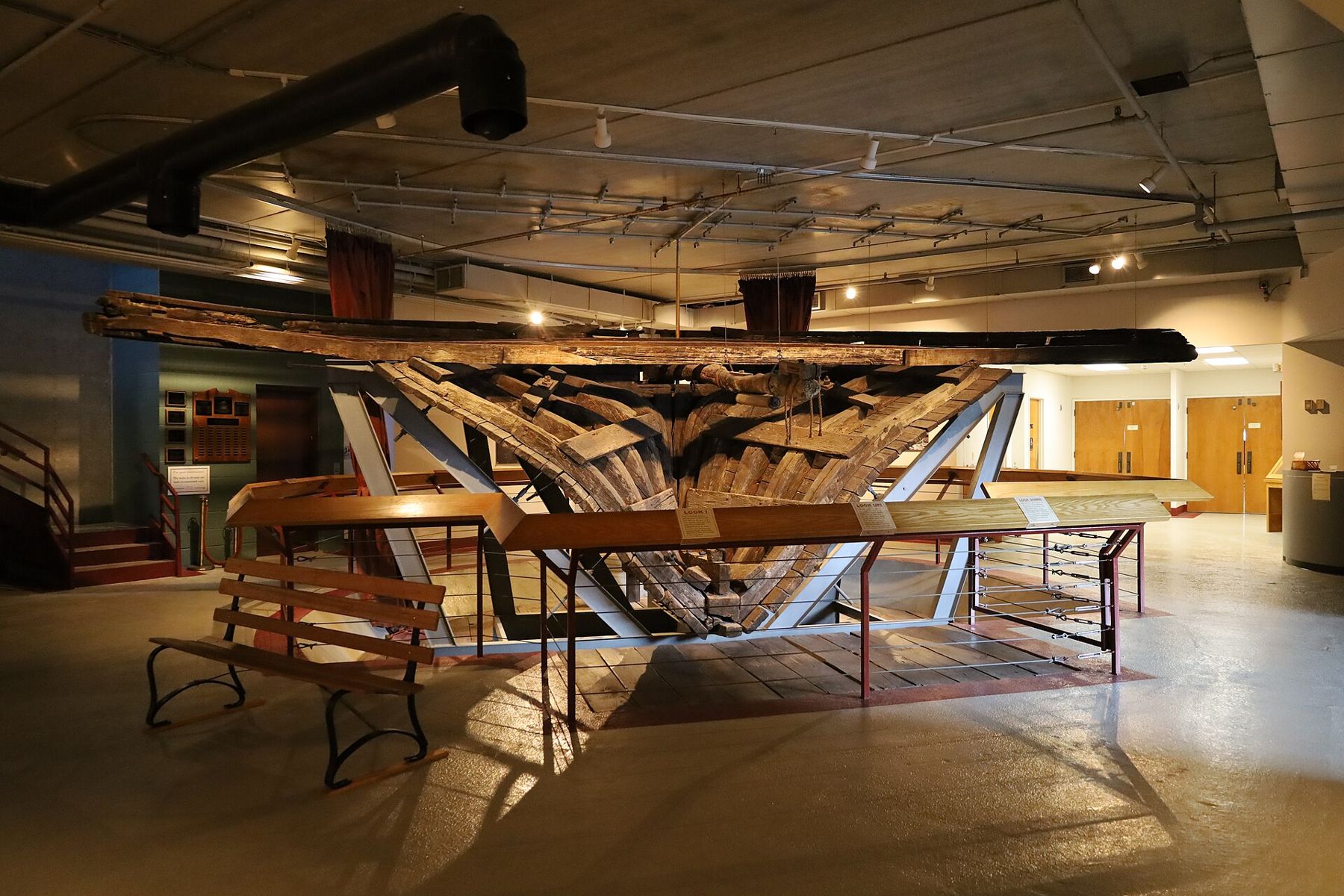
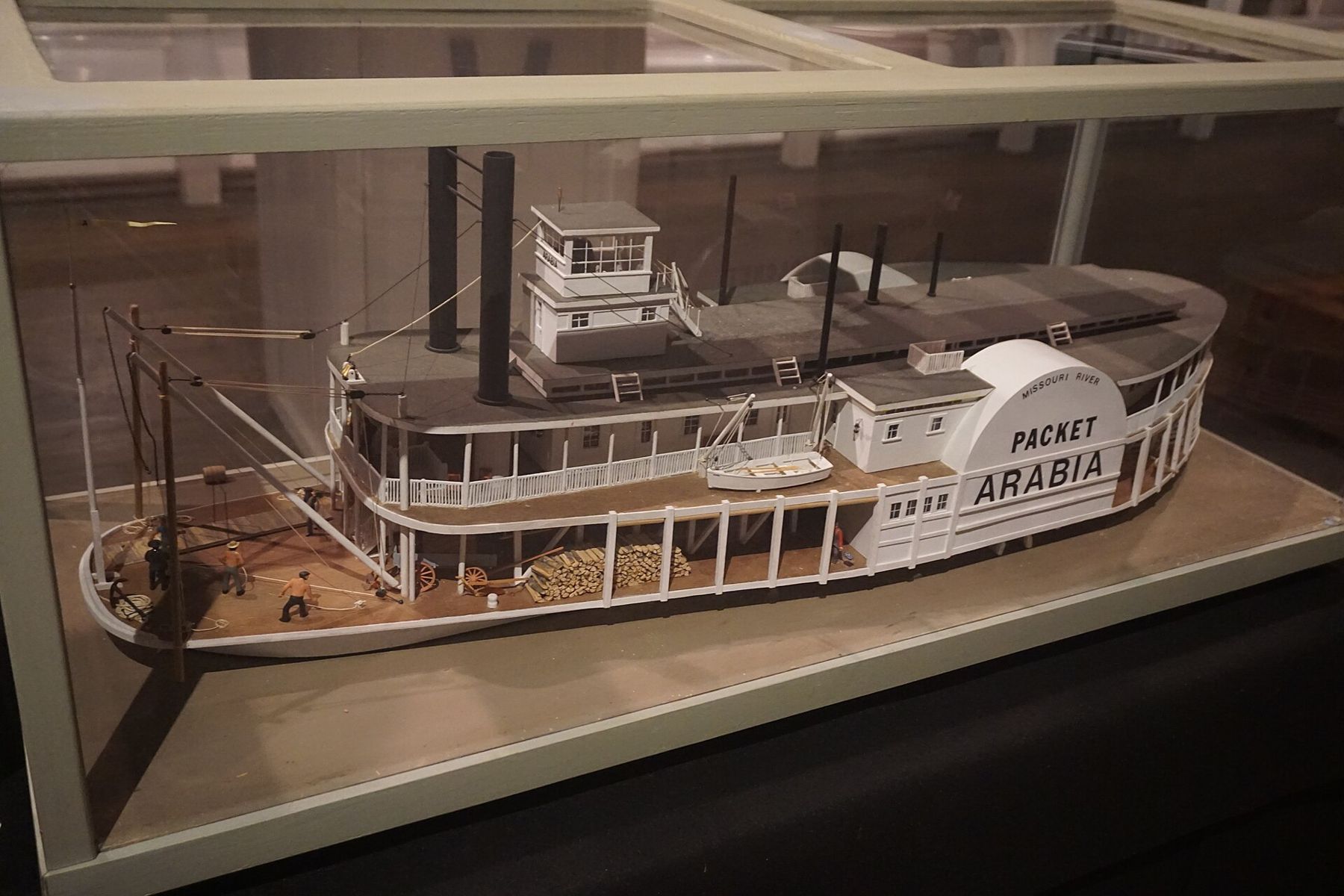
On September 5, 1856, the steamboat Arabia was working upstream on the Missouri River just below Parkville, carrying passengers and a large cargo of goods for the towns and trading posts upriver. Late in the day she struck a submerged walnut tree, a snag, which tore open her hull. She sank in minutes.
The passengers and crew, more than a hundred people, reached shore. The only life lost was a mule tied on deck. Almost all of the cargo, some 200 tons of it, went to the bottom with the boat.
A boat of the river trade
The Arabia was a sidewheel steamboat, about 170 feet long, typical of the boats that carried people and freight up the Missouri in the 1850s. Those years were the high point of the river trade. Before railroads reached the region, steamboats were the main link between St. Louis and the river towns, from Lexington and Kansas City up to Weston, St. Joseph and beyond.
The river was dangerous. Snags, sandbars, ice, fires and boiler explosions sank hundreds of steamboats on the Missouri in the nineteenth century, and many boats lasted only a few years. The Arabia was one of many lost on this stretch alone. What made her different is what happened afterwards.
Lost under a cornfield
The Missouri was then a wild, shifting river. In the decades after the wreck, the channel moved away from the spot where the Arabia went down. Sand and silt filled in over her, and the old riverbed became farmland on the Kansas side of the river. By the twentieth century the wreck lay under a field about half a mile from the river, and deep below the surface.
People along the river remembered the story, and some had tried to find the boat or reach her cargo, but none succeeded. The wreck stayed buried for more than 130 years.
The 1988 excavation
In 1987 a small group of Kansas City men interested in steamboat wrecks used old maps and a metal detector to locate the Arabia under a farm field in Wyandotte County, Kansas. With the landowner's permission, they began to dig in November 1988.
The work was hard and fast. The field sat well below the level of the water table, so the crew had to drill wells and run pumps around the clock to keep the pit from flooding. They dug down some 45 feet, through the old river sand, and reached the hull. Over the winter they brought up the cargo before the spring thaw and the farmer's planting season.
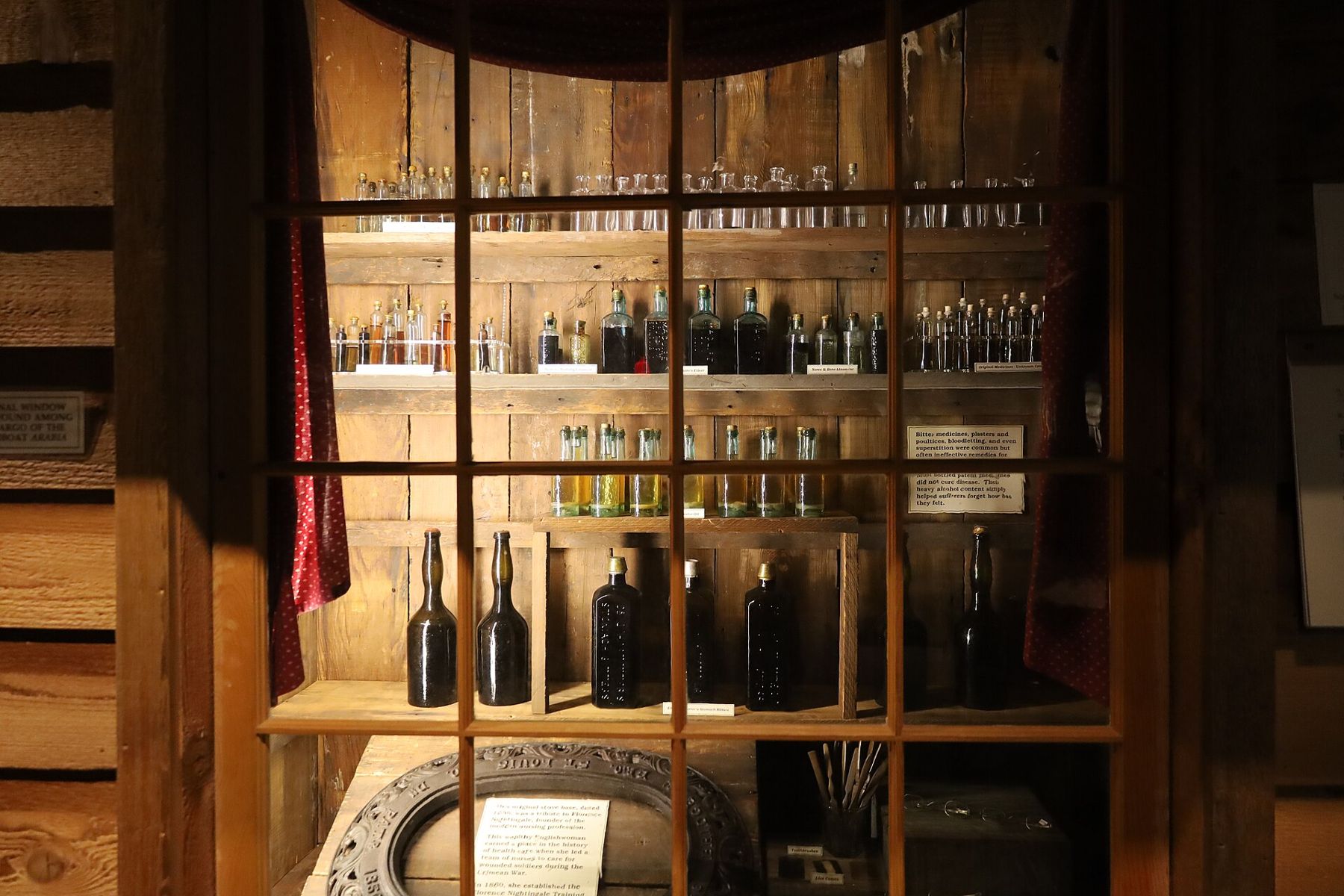
What they found surprised them. The cold, wet, airless mud had preserved much of the cargo almost as it had been loaded. There were dishes, glass bottles, tools, boots and shoes, buttons and beads, hardware, guns, clothing and even preserved foods in sealed jars.
What the cargo tells
The Arabia was carrying goods ordered by merchants in the river towns and in the settlements just beginning to grow in Kansas and Nebraska. That makes her cargo a kind of shopping list for the frontier of 1856. There were plates and cups for new households, axes and saws for clearing land, nails and hinges for building, and cloth, shoes and hats for families who could not make everything themselves.
The goods also show how closely the river towns were tied to the wider world. Much of the cargo came from factories in the East and from Europe, shipped by rail and river to St. Louis, then loaded onto boats like the Arabia for the trip up the Missouri. A store in Weston or St. Joseph in the 1850s could sell many of the same things as a store in Pittsburgh, as long as the boats got through.
The museum
The Arabia Steamboat Museum opened in 1991 in the River Market district, on the north edge of downtown Kansas City and near the river. The museum displays a large part of the recovered cargo, along with parts of the boat, including the stern and some of the machinery. It is one of the largest collections of goods from the 1850s anywhere, and it gives a detailed picture of what people on the frontier bought and used.
A working preservation lab is part of the museum, and staff are still cleaning and preserving objects from the wreck years after the dig. You can often see the work through windows into the lab.
A visit usually takes about two hours. There is an admission fee, and hours change, so check before you go.
Reading the river through the Arabia
The Arabia's story is also a story about the river itself. In 1856 the Missouri was wide, shallow and constantly changing. Since then it has been narrowed and channeled into one deep path, and the land where a steamboat went down is now a farm field. The same shifts left Weston and other towns that had once been river ports without a river at their doors. To read more about that, see Weston's river-port past.
The wreck site itself is on private farmland and is not open to visitors. Nothing is left to see there.
Planning a visit
- Getting there: the museum is in the River Market, a short drive or streetcar ride from downtown Kansas City.
- Time: two hours for the museum, more with a walk through the River Market district.
- Season: indoors, so any time of year works.
- Combine with: a day in the city; see a Kansas City day from the river towns.
Notice
Notice: a steamboat's cargo of 1856, dug from a Kansas cornfield, is on display near the River Market. Open most of the year; check hours before you go.