The river towns north of Kansas City are close enough that the city makes an easy day out. From Weston it is about 30 miles to downtown; from Parkville, less than half that. You can start where the city began, by the river, and work south through the twentieth-century city that railroads, cattle, music and money built.
Start by the river
Kansas City started at a landing on the Missouri River just below the mouth of the Kansas River, in the 1830s and 1840s, as a place where steamboats unloaded goods for the Santa Fe and Oregon trails. The area around that old landing is now the River Market, on the north edge of downtown. A public market has operated here for a long time, with farmers and vendors in open-air stalls, especially on weekend mornings in season.
The district is also home to the Arabia Steamboat Museum, which displays the cargo of a steamboat that sank near Parkville in 1856. Allow about two hours. A short walk away, overlooks on the bluffs give views of the river, the bridges and the old West Bottoms below.
Before you leave the river, remember that Lewis and Clark camped in June 1804 just west of here, on the point where the Kansas River meets the Missouri. More on that is in Lewis and Clark on this stretch of river.
Union Station and the war memorial
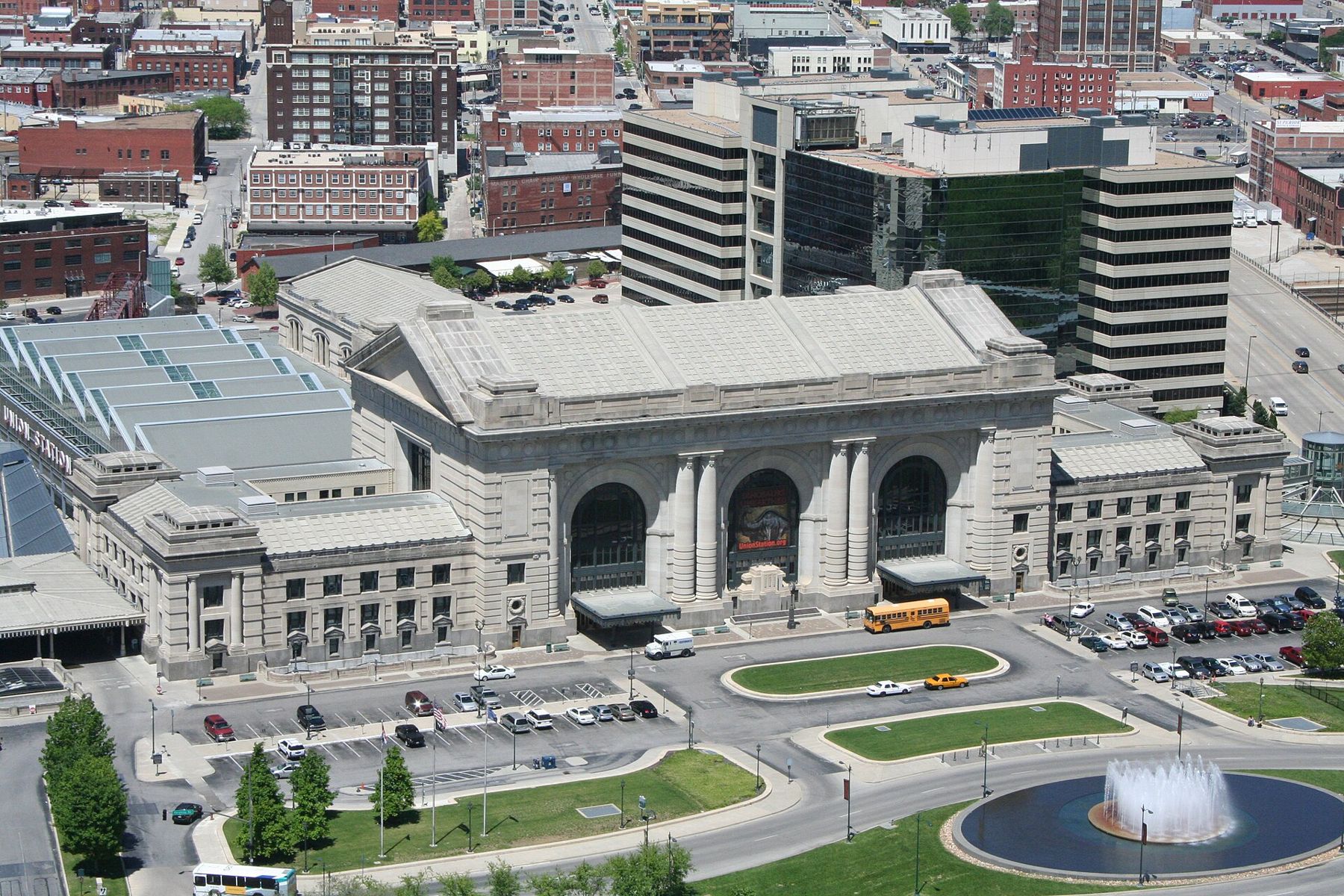
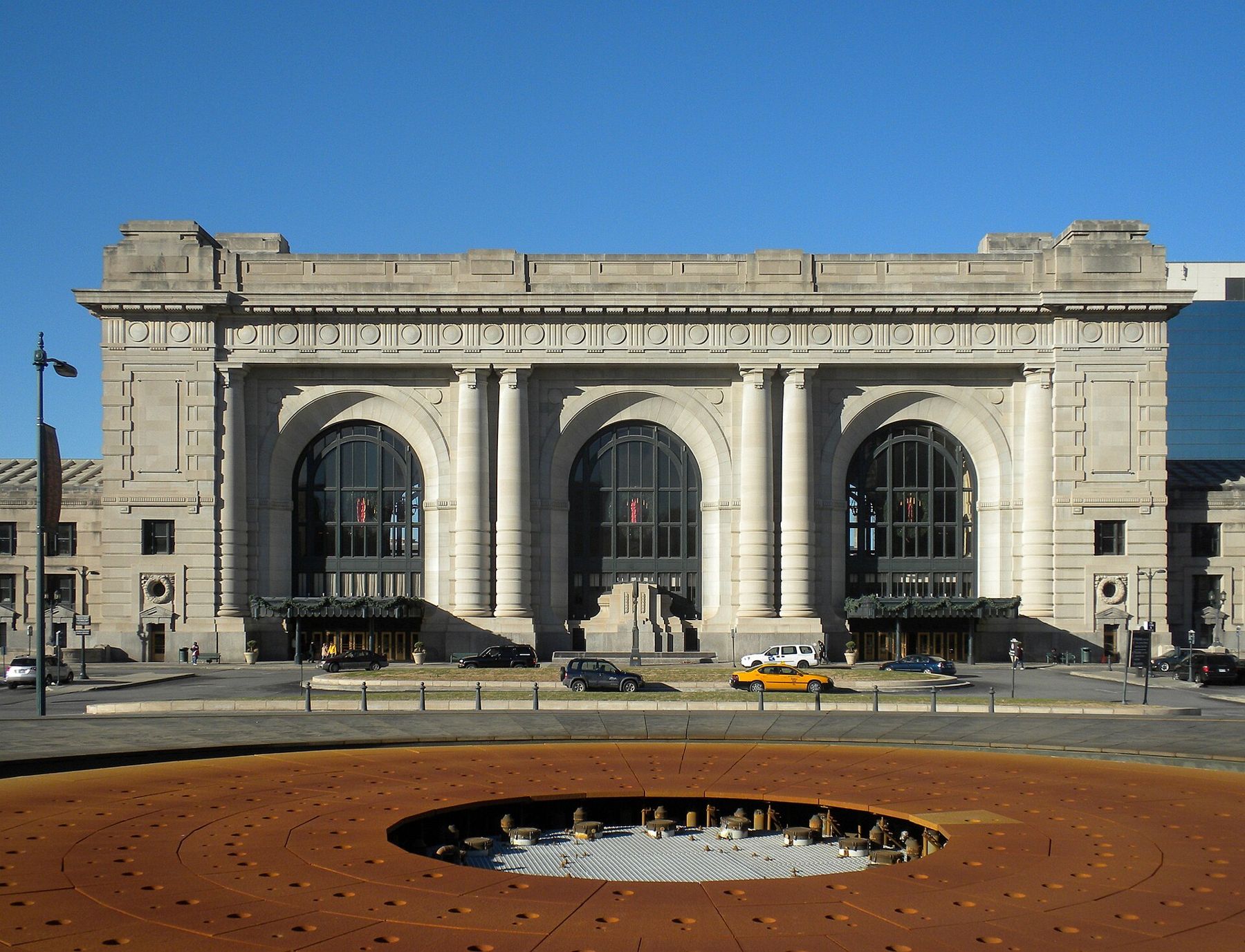
The city's streetcar line runs south from the River Market through downtown to Union Station. Fares, routes and extensions change, so check the current service before you go. Union Station opened in 1914, designed by the architect Jarvis Hunt, and was one of the busiest rail stations in the country in its peak years. Its great hall has a high, ornate ceiling and huge arched windows, and it is worth seeing even if you do nothing else.
The station had a long decline as passenger rail faded after the Second World War, and it was nearly lost. A long restoration was completed in 1999, and the station reopened with museums, exhibits and public spaces. Amtrak trains still use it.
Across the street on the hill stands the Liberty Memorial, dedicated in 1926 to those who served in the First World War. Beneath it is the National WWI Museum and Memorial, which covers the war in depth. Even without going in, the climb to the memorial's base gives one of the best views of the city skyline and Union Station.
The Nelson-Atkins lawn
A few miles south, the Nelson-Atkins Museum of Art stands on a rise above wide lawns. The museum opened in 1933 in a large classical building and added a striking glass building, the Bloch Building, in 2007. Its collections range across world art, with particular strength in Asian art.
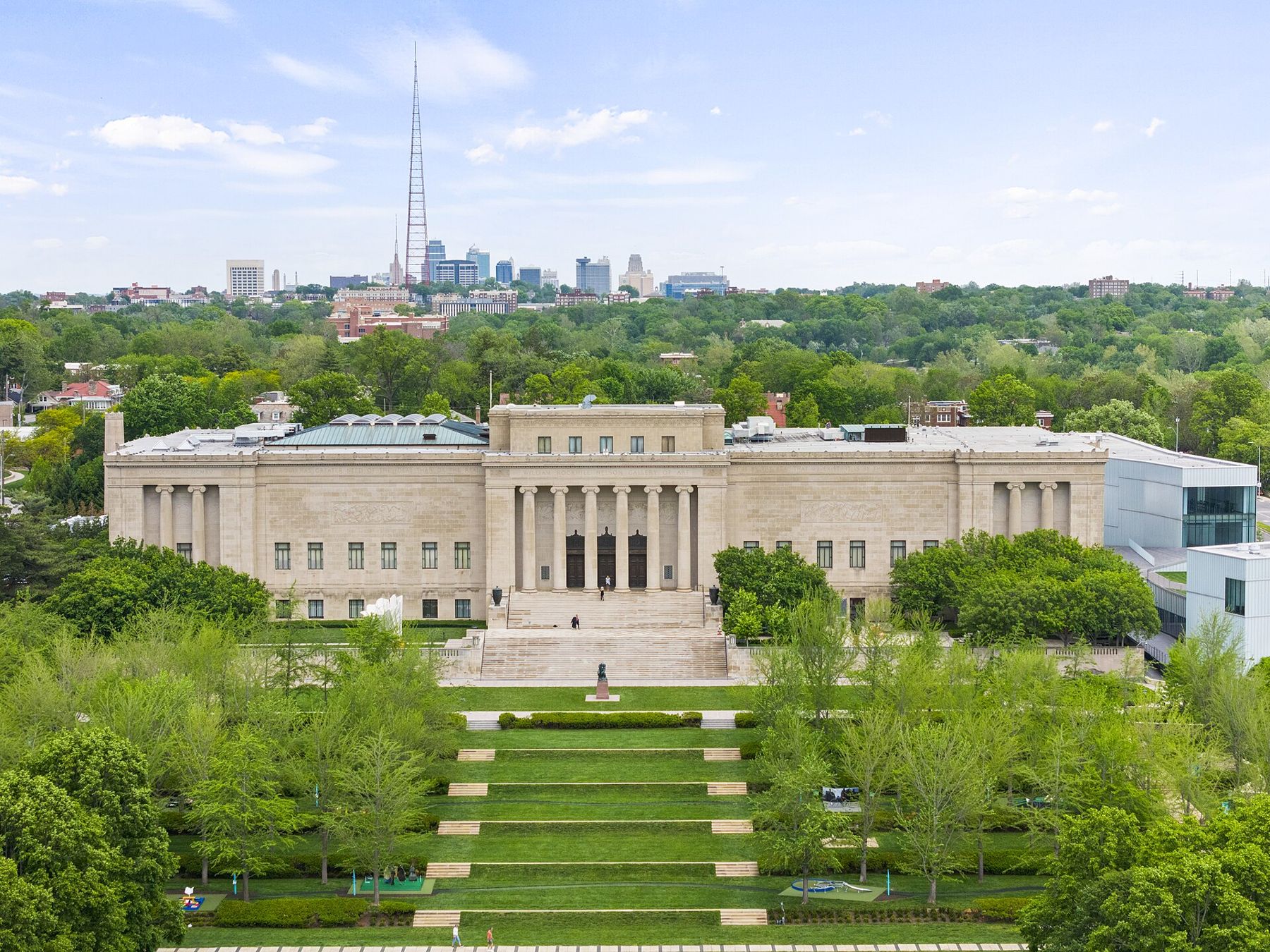
The grounds are a large part of the pleasure. The sculpture park around the museum is full of large outdoor works, among them giant shuttlecocks set out across the lawn as if dropped from a game. It is a good place to sit and rest during a busy day. Admission policies and hours change, so check before you go.
The city is known for its fountains, and you will pass several on the drive between the museum and downtown.
18th and Vine
To the east of downtown, the 18th and Vine Historic Jazz District was the heart of Black Kansas City in the first half of the twentieth century. In the 1920s and 1930s it was one of the great centers of American jazz, with a fast, blues-based style tied to Count Basie, Charlie Parker and many others.
The district is also where the Negro National League was founded in 1920, at a meeting in the neighborhood. The Kansas City Monarchs became one of the leagues' great teams. Today the district holds two museums under one roof, the American Jazz Museum and the Negro Leagues Baseball Museum, which tells the story of Black baseball in the era of segregation. Check hours before you go; a visit to both takes several hours.
Around the museums, the neighborhood still has many of the brick buildings from the jazz years, and the streets are lined with markers and murals about the music and the ballplayers. In the evening, live music still plays in the district on many nights. Walk a few blocks in each direction to get a sense of how large and lively the neighborhood once was.
Planning the day
A full day can cover the River Market in the morning, Union Station and the memorial at midday, and either the Nelson-Atkins or 18th and Vine in the afternoon. Doing all four is possible but rushed. Driving and parking are usually straightforward outside of big events, but traffic around downtown can be slow at rush hours.
- From Weston: south on Highway 45 or I-29, about 40 minutes to downtown.
- From Parkville: about 20 minutes to the River Market.
- Season: spring and fall are best; summer can be hot for walking the lawns and hills.
- Hours and fees: museums, the streetcar and events all change their schedules. Check before you go.
On the drive back north, cross the river at sunset and look back at the skyline above the water. From the north bank you can see how the city grew up from its river landing, much as Parkville and the other river towns did on a smaller scale.
Notice
Notice: one day takes in the River Market, the 1914 rail station, the art museum lawn and the jazz district. Spring and fall suit the walking best.